A Major Step Toward Driverless Freight
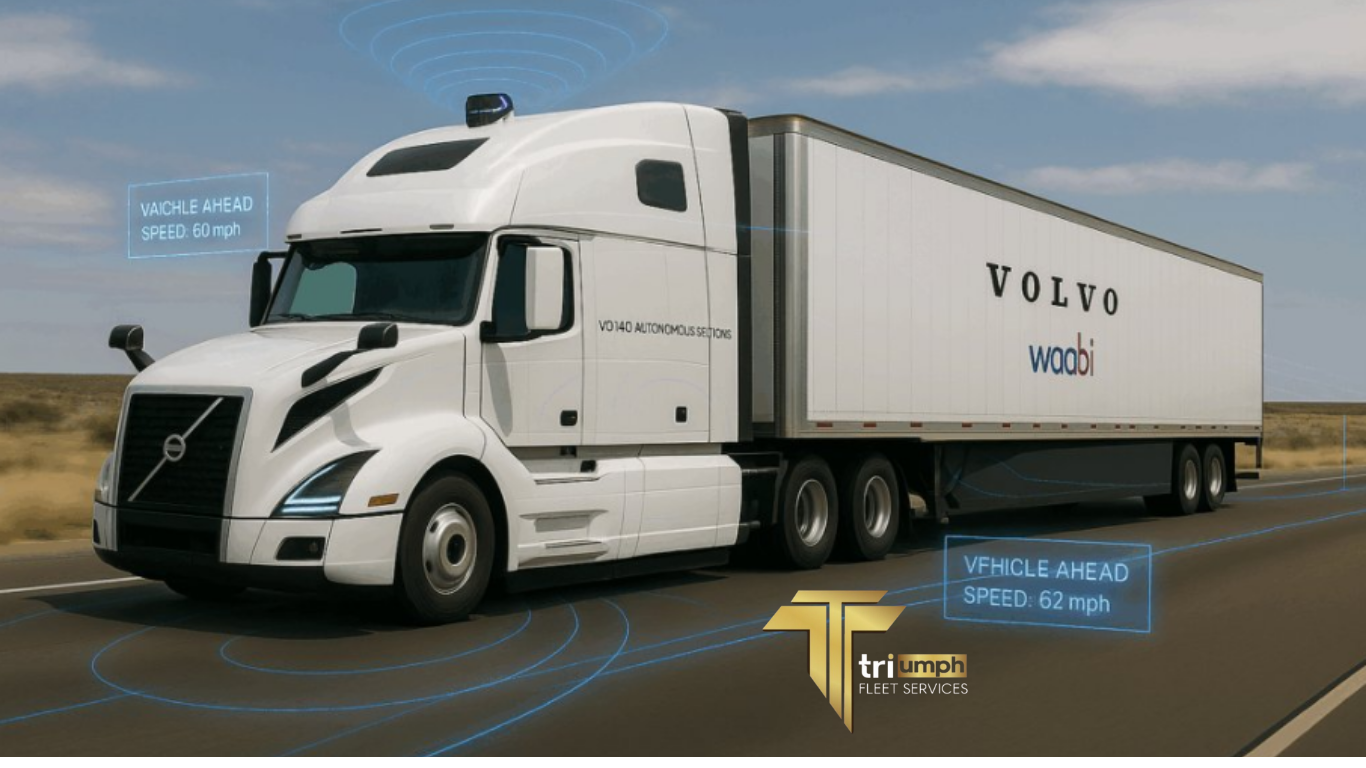
Volvo Autonomous Solutions and Waabi have achieved a new benchmark in autonomous trucking. The companies announced that the Waabi AI Driver has been successfully integrated in the Volvo VNL Autonomous truck – a truck that is purpose-built for safe operations, without a driver.
This marks one of the most advanced collaboration in the autonomous freight industry to date and brings the technology one step closer to real world deployment after it has been tested.
What the Integration Means
The Volvo VNL Autonomous features multiple sets of backup systems, such as the steering, the braking, and the communication systems, to ensure safety even without someone to drive the vehicle.
By combining these redundancies with Waabi’s advanced self-driving software, the two companies hope to provide a truck that can run safely and efficiently on U.S. highways.
“Together with Volvo, we are taking autonomous trucking forward,” said Raquel Urtasan, Usually Founder and CEO of Waabi. “The Volvo VNL Autonomous, which is powered by the Waabi Driver, is the next step in bringing a stronger, safer, and more efficient era in transportation.”
Waabi’s system has a human-interpretable AI system that moves between different routes and conditions, an important step in gearing it up for commercial use in various regions.
Focus on Safety and Real-World Deployment
Both companies emphasize that it is the safety that comes before expansion.
“Autonomy will be, I believe, one of the biggest challenges in the transport industry, including safety, efficiency, and capacity,” said Nils Jaeger, President of Volvo Autonomous Solutions. “With a movement of community, we’re building the framework for a stronger future for freight.” “Since we’re all on the same page, that’s ultimate.”
Waabi has tested its driver technology on public roads for three years now and anticipates its driverless software will be ready by the end of 2025.
Until Volvo’s fully redundant hardware platform is complete, Waabi will keep an eye on operations through an observer in the cab.
How It Affects Carriers and Dispatchers
Autonomous trucks are still in the limited testing phases, but the technology is advancing rapidly throughout the U.S., specifically in Texas and the Southwest.
For carriers and dispatch teams this development can mean several things in the long term:
- Lessening driver shortages in long-haul routes
- More predictable delivery schedules—continuous operation
- Reduced risks of tiredness and increased safety
- New dispatch roles to focus on monitoring and coordinating autonomous units
Autonomous systems will not be replacing human drivers overnight. For now, fleets are thought to be operating in mixed mode—human-driven and artificially intelligent assisted trucks at work together.
Preparing for the Future of Freight
For now, the signs of progress by Waabi and Volvo are a test-stage success, not an industry shift—but the direction is clear.
As more partnerships like this one are created, dispatchers, carriers, and logistics teams at large will increasingly rely on real-time visibility tools, digital paperwork, and AI-supported route management to get the jump on the competition.
The Volvo VNL with Waabi AI Driver is a sign of things to come: technology developed for the real roads and aimed at creating a safer and more efficient way to move freight—with people and automation working side by side.
👉 Contact Triumph Fleet Services at www.TriumphFleetServices.com or call us at [+1 (682)900-3356]