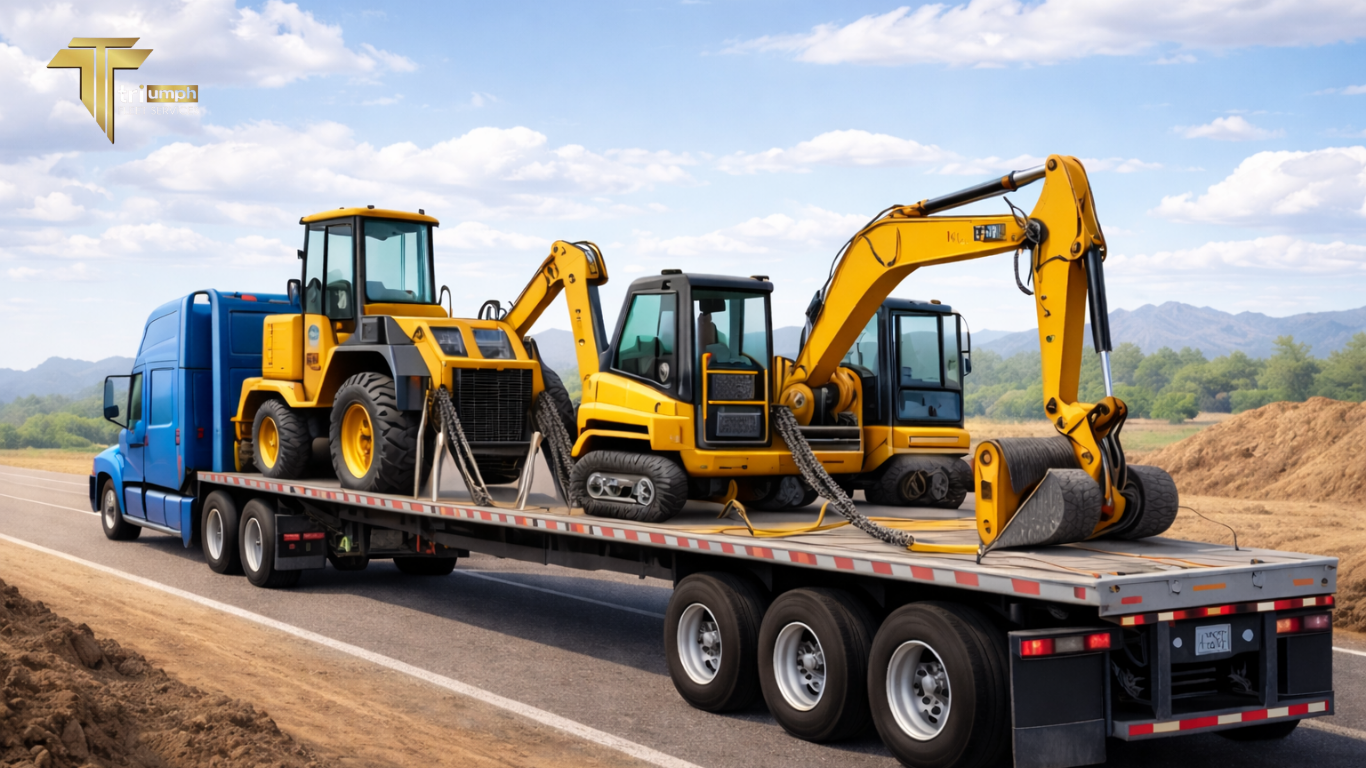
Flatbed trucking is one of the most versatile pieces of freight transportation. Unlike enclosed trailers, flatbeds offer an open deck without any walls or roof so that it is possible to haul oversized, oddly shaped, or exceptionally heavy cargo. This versatility has made flatbeds indispensable for varied industries as well, ranging from construction to renewable energy.
But what is the optimal thing to travel well on a flatbed? While just about anything can be secured on these open trailers, there are certain types of freight that lend themselves especially well to these types of trailers. Below, we’ll go into depth on how to consider the top five freight categories that are perfect for flatbed trucking and how they can be a part of your logistics strategies and linear activities, just to explore a bit more why flatbeds make the perfect partner to truck your product.

1. Construction Materials
The Backbone of Building Projects
Construction sites run on the constant availability of vital materials: steel beams, lumber, rebar, bricks, concrete pipes, roofing supplies, to mention a few. These materials typically are too large, heavy and cumbersome for enclosed trailers. The ability to be loaded from the sides or top with cranes and forklifts is something that makes the process seamless on flatbeds with their open design.
A flatbed can draw right up to a building site – no dock was needed – enabling workmen to unload the cargo rapidly and directly where it’s required. This efficiency is essential in an industry like this where time is money.
Imagine a downtown skyline being built: palm-high cranes lifting steel beams from flatbed trailers while they’re slotted neatly into the skeleton of a high-rise. If the versatility of flatbed trucking were eliminated, this coordinated dance of progress would come to a halt.
Why Flatbeds Work Best
- No restrictions on length or width for beams, planks, or sheets.
- Easy crane or forklift access.
- Ability to deliver directly to sites without loading docks.
2. Industrial Machinery & Heavy Equipment
Moving Giants on Wheels
Industrial machinery, generators, printing presses, turbines, and heavy manufacture tools, weighs several tons and have unusual dimensions. The same is true of construction and earth-moving equipment, such as bulldozers, backhoes, and excavators. These machines are simply far too large to fit into ordinary enclosed trailers.
The natural solution is flatbeds. Their rigid decks can manage tremendous weight, while stepdecks or double drop flatbeds can handle extra tall cargo. Chains, straps and tarps help to keep the equipment secure during transport.
Imagine a brand new excavator on a flatbed in terms of pride, seated on top of the machine and moving down the interstate highway to its new job site. Its bucket shines in the sun in promise of digging the future roads, bridges and buildings. That excavator’s journey starts not with its first scoop of dirt but by means of a flatbed truck.
Why Flatbeds Work Best
- Strong decks designed for heavy weight.
- Specialized flatbeds (RGN, step-deck, double-drop) accommodate taller or oddly shaped machinery.
- Loading and unloading flexibility—roll-on, lift-on, or crane-assisted.
3. Pipes, Tubing, and Long Loads
The Challenge of Length
Pipes, tubing, beams and poles are often much longer than the usual 53 feet trailer length. Transporting these things means it requires not only space but the ability to hold down these things safely over long distances.
Long freight is handled better on flatbeds. Extendable or stretch flatbeds could hold the cargoes up to 80 feet or more in case the industrial piping as fear oil and gas projects, water systems or construction might reach its destination intact.
Imagine a train of flatbeds moving along the highway loaded with huge steel pipes shining in the sun. They look like gigantic metallic straws that go on to the horizon that are destined to become the life line of a city’s water supply.
Why Flatbeds Work Best
- Can handle oversized lengths safely.
- Extendable trailers adapt to unusual dimensions.
- Securement options (chains, straps, spacers) ensure the load doesn’t shift.
4. Agricultural Equipment
Feeding the World with Flatbeds
Agriculture requires large and powerful machines – tractors, harvesters, seed drills, irrigation systems and balers. These pieces of equipment are large, wide, and sometimes very oddly shaped, making enclosed transport impossible.
Flatbeds offer the open space and strength required to move such equipments between manufacturers, dealerships, and farms. During peak planting or harvesting seasons, timing is of the utmost importance and flatbeds help to keep the agricultural calendar on track.
Imagine the scene of a rural sunrise with a flatbed truck traveling down a gravel road loaded with a brand-new combine harvester. As it’s unloaded, the machine will soon be rolling across fields of golden wheat, and the sunrise will see nuts of harvest. The flatbed is not just driving around with equipment on it – it’s delivering productivity and food security.
Why Flatbeds Work Best
- Wide decks can handle bulky or irregularly shaped farm equipment.
- Easy side or crane access for loading and unloading.
- Essential for seasonal timeliness—farmers can’t afford delays.
5. Oversized & Specialty Cargo
When Size Breaks the Rules
Some freights just don’t fit any of the other classes. Wind turbine blades, solar panels, prefabricated homes and large coils of steel are all in the “specialty cargo” category, as are whole airplane parts. These over-sized and often weak items require both imagination and transportation capabilities.
Flatbeds (and specialized versions of them such as RGN’s or double drops) are made for these specific challenges. They can be a way for the shippers to move freight that is over normal height, width, or weight limit which requires permits and escort vehicles.
Creative Snapshot
Imagine a single wind turbine blade, the length of a city bus, lying flat on a bed loaded onto it and spearing its way down rural protected highways. Escorted by pilot cars, it moves slowly, with gazes from all those it passes. That blade’s destination? Place a wind farm where it is soon to realize that it can spin without any noise, helping power thousands of homes with clean energy.
Why Flatbeds Work Best
- Customized trailer configurations handle extreme lengths, widths, and heights.
- Perfect for renewable energy projects, prefabricated buildings, and industrial installations.
- Support for delicate securement methods (tarps, padding, specialized racks).
The Advantages of Flatbed Trucking for These Freight Types
Flatbeds are still indispensable because of their flexibility, strength and accessibility. Here’s why they are unique for the five categories above:
- Open deck access: cargo may be loaded from the sides of the ship, aft, or above it, thus decreasing the handling time.
- Oversize-Friendly—Length, width, and height restrictions are more manageable than they are with enclosed trailers.
- Securement variety: chains, straps, binders, and tarps fit the requirements of the load.
- Site accessibility: flatbeds can be brought to farms, construction sites, or even energy projects that do not have a loading dock.
Ultimately, flatbeds serve as problem solvers on wheels rather than just being trailers.
👉 Contact Triumph Fleet Services at www.TriumphFleetServices.com or call us at [+1 (682)900-3356]