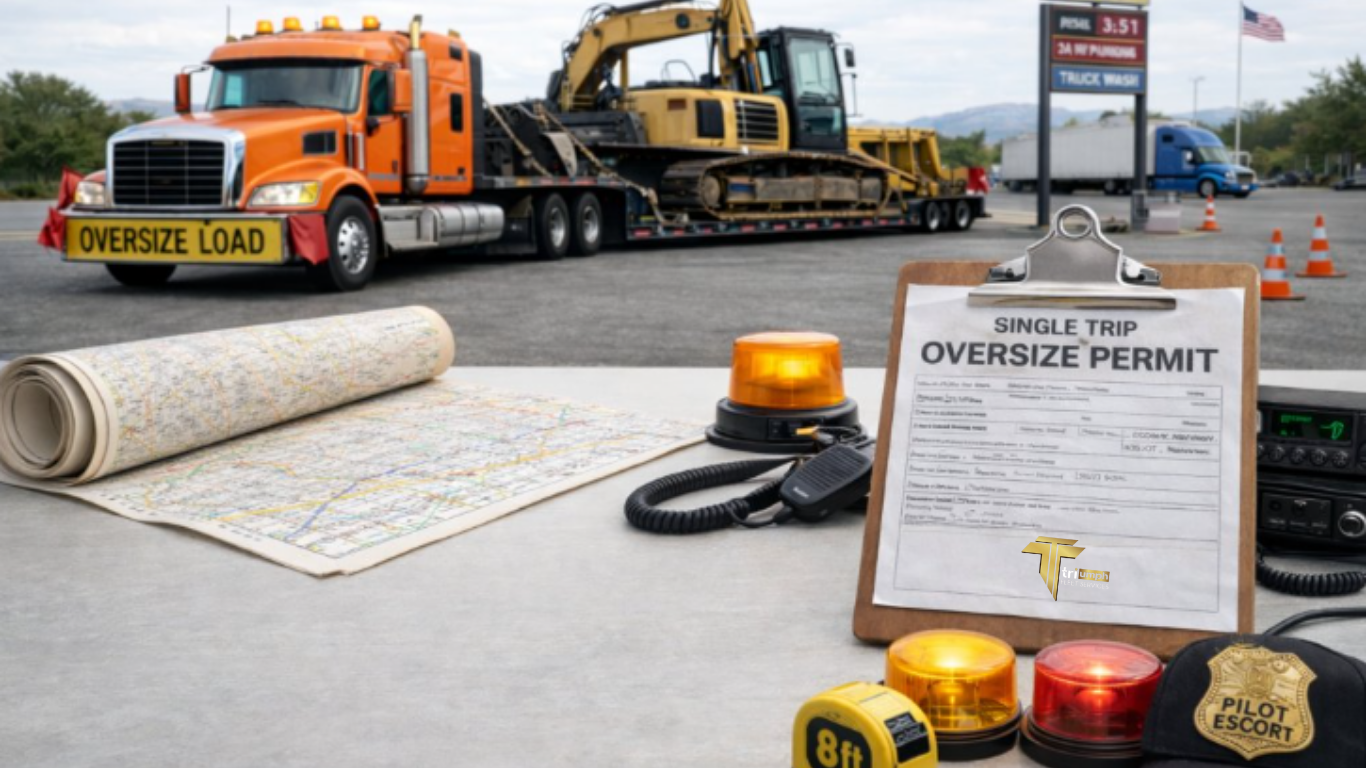
Flatbed trucking is an important part of the transportation of goods that cannot be handled in traditional enclosed trailers because they are too large, wide, tall, or heavy. These unseemly loads power entire industries – from construction to energy to manufacturing and infrastructure. However, the process of transporting oversized freight is not as simple as just securing it on a flatbed. It requires special attention to permits, regulations and safety protocols that vary from state to state.
This guide covers everything drivers, carriers and those that can transport cargo via road must know about oversize load permits for flatbed trucking. We’ll discuss what size freight is, why you need permission to take it, how you can get it, and the rules you must follow to make sure you abide by the laws to keep your act in line and prevent any safety accidents.

What Is Considered an Oversize Load?
An “oversize” load is any shipment that is larger than the legal maximum dimensions and vehicle weight requirements set by the federal government and individual states. While federal guidelines provide a basis for instruction, other states have control of their own roads and may impose different restrictions.
In the most general definition, loads on a flatbed are considered oversize if
- Width: 8 feet 6 inches
- Height: 13 feet 6 inches (varies by state)
- Length: 48 – 53 feet (note boxes) Trailers, although combinations can have longer lengths
- Weight: 80,000 pounds gross vehicle weight (GVW), 20,000 pounds per axle
For example, a flatbed that carries large industrial equipment, that measures 10 feet wide or that is 14 feet high will need a permit since it is greater than legal dimensions. The same is true of heavy machinery that pushes the weight of a truck over federal or state limits.
Why Are Oversize Load Permits Required?
Permits are not some virtue of bureaucratic red tape – they serve critical purposes:
- Safety for the public: Oversized loads can be dangerous for other drivers because they are too large, out of sight or because they are moving at a slower speed. Permits help to make sure there are safety precautions in place.
- Protection of Infrastructure Bridges, roads, and overpasses have weight and clearance limitations. Permits keep loads from damaging public infrastructure.
- Route planning: Some roads are not allowed that accommodate the oversize loads because of the sharp turn, construction zone or lack of clearances. Permits are frequently attached with restrictions for carriers, and these restrictions include following designated routes.
- Traffic management: Some loads can only be transported during certain hours of the day (i.e., daylight or off-peak hours) in order to avoid congestion and ensure safety.
Without the proper permits, carriers are burdened with heavy fines, delayed shipping or even impounding of cargo and equipment.
How to Obtain Oversize Load Permits
The process for obtaining an oversize permit varies by state, although the general process is fairly similar in the states across the country.
1. Determine if a Permit Is Needed
Measure the freight carefully – height, width, and length, as well as weight. Compare the dimensions to the state’s legal ones. Even if the shipment is legal in one state, moving it into another may require a permit.
2. Identify States Along the Route
Permits generally must be obtained from each state that the load will travel in. A multi-state trip could require multiple guides, any of them with their very own fees and conditions.
3. Apply Through State Permit Offices or Online Portals
Most states have online systems through which carriers can apply for a permit. Some will accept applications by fax or phone (however, applications submitted online are faster and more common these days).
Common information required is:
- Truck and trailer details
- Overall dimensions, Weight
- Origin and destination
- Proposed route
- Dates of travel
4. Pay Permit Fees
Permit costs vary widely. Some states have a flat fee, while others have a charge per mile driven, load size or time. A single trip permit may cost anything between 15 and several hundred dollars.
5. Follow Permit Conditions
Permits may be accompanied by restrictions such as limiting the hours they travel, travelling in vehicles or with a plan of signs/postings or lights. These have to be strictly followed to be in compliance.
Single-Trip vs. Annual Permits
Carriers have the following two types of oversize permits to choose from:
- Single-trip permits are the ones in which the transportation of a particular load is provided from one point to another within a time limit (typically 3 – 10 days). They are best for one-time or erratic shipments.
- Annual permits give the carrier the ability to transport certain types of oversize loads more than once during a year, typically within certain size and weight limitations. These are cost-effective for companies that move similar freight that takes the same routes frequently.
Escort Vehicles and Pilot Cars
Depending on the size of the load, states are allowed to require escort vehicles (also known as pilot cars) to accompany the truck. These vehicles warn other motorists of the presence of a wide or long vehicle and aid the transportation of trucks to navigate the traffic.
Typical requirements are:
- One front escort vehicle: for loads that are wide or those which run on two-lane roads.
- One rear escort vehicle: For loads which are tall or heavy and might cause blockage to traffic.
- Front and rear escorts: Both escorts are for extremely large shipments.
Escort vehicles may often need to be equipped with certain equipment: these may be “Oversize Load” signs, flashing lights or flags.
Travel Restrictions
Oversize permits are frequently accompanied by travel restrictions intended to ensure that there are minimum safety risks and traffic emergencies. Common rules include:
- Daylight-only travel: Usually the oversize loads are limited to travel during daylight hours.
- No travel on weekends or holidays: To minimize risks during the period of high traffic.
- Weather restrictions Travel may be forbidden during periods of heavy rain, snow, or fog.
- Rush hour bans: Some states have bans on traveling through the cities during rush hour.
Carriers should at all times consider the conditions found on their permits to prevent a violation.
Common Challenges in Oversize Flatbed Hauling
1. Varying State Rules
Since every state has its own rules, for carriers it is a patchwork of regulation. What is legal in one state (Texas) may not be legal in another state (Illinois), for example.
2. Permit Processing Times
Some states take a few hours to issue a permit, while others may take days. Delays in the permitting can throw shipping schedules off course.
3. Route Restrictions
Detours, construction areas or bridge closures can make approved routes complicated. Carriers may be forced to reapply for modified permits.
4. Additional Costs
Beyond permit fees, there may be costs for escort vehicles, signage and additional insurance, as well as fuel surcharges from longer routes.
Tips for Staying Compliant
- Plan ahead. Apply for permits well in advance of dates scheduled for shipping.
- Double-check dimensions: Double-checking dimensions can help to ensure invalid permits or any safety hazards are avoided.
- Use technology: Oversize load GPS routing software is available to make the planning process easier.
- Partner with permit services – third-party companies can handle the entire process, as they can provide compliance and save time by doing the same.
- Become Informed – Regulations constantly update; make sure you are aware of the most recent regulations before each haul.
The Role of Permit Services
For many trucking companies, oversize allowances are too much to handle alone. That is where permit services come in. These specialised agencies deal with permit applications, route planning and compliance for carriers.
Benefits of using permit services are:
- Faster processing because of established relationships with the state offices
- Decreased possibility of errors in applications
- Ability to handle multi-state shipments with greater efficiency
- Expert advice on routing and escorts and scheduling
While they create additional costs, permit services can save time and avoid costly mistakes.
Penalties for Non-Compliance
Failure to ensure correct oversizing permits can have serious consequences:
- Fines: Penalties vary between hundreds and thousands of dollars per violation.
- Delays: Trucks may be required off the road waiting until proper permits are obtained.
- Cargo impoundment: Governments may impound the cargo until compliance is made.
- Damage to Reputation Shippers may avoid using carriers who cut corners.
Compliance is always cheaper and safer than taking risks.
Looking Ahead: Technology and Oversize Permits
The future of oversize permitting is taking a new turn to be streamlined with the help of digital tools. Many states are investing in online portals, which enable carriers to apply, pay and receive their permits online. Some systems even include automatic routing that takes bridge heights and construction and restrictions into consideration.
In the near future, combining GPS with conditions on permits issued in real time may reduce the delays and errors. Carriers who adopt these technologies will be more efficient and have a competitive advantage.
Conclusion
Transporting oversized loads on flatbeds is a critical – yet well-controlled – aspect of the trucking industry. Permits ensure the safety of both drivers and the public, protect infrastructure and ensure the efficient movement of freight. While the process seems to be complicated, careful planning and ensuring compliance with rules for each respective state make it manageable.
To carriers, success in oversize hauling is all about preparation. Measure freight accurately, get permits in advance, and get travel restrictions and the professional permit services for complex routes. Doing so isn’t only good practice to avoid costly fines and delays but also good reputation-building practice in one of the most challenging niches of trucking.
With the right knowledge and strategy in hand, flatbed operators can confidently handle oversize loads and keep America’s industries moving forward – in a comfortable bed of trucks they need for heavy and specialised jobs to keep a company going strong.
👉 Contact Triumph Fleet Services at www.TriumphFleetServices.com or call us at [+1 (682)900-3356]