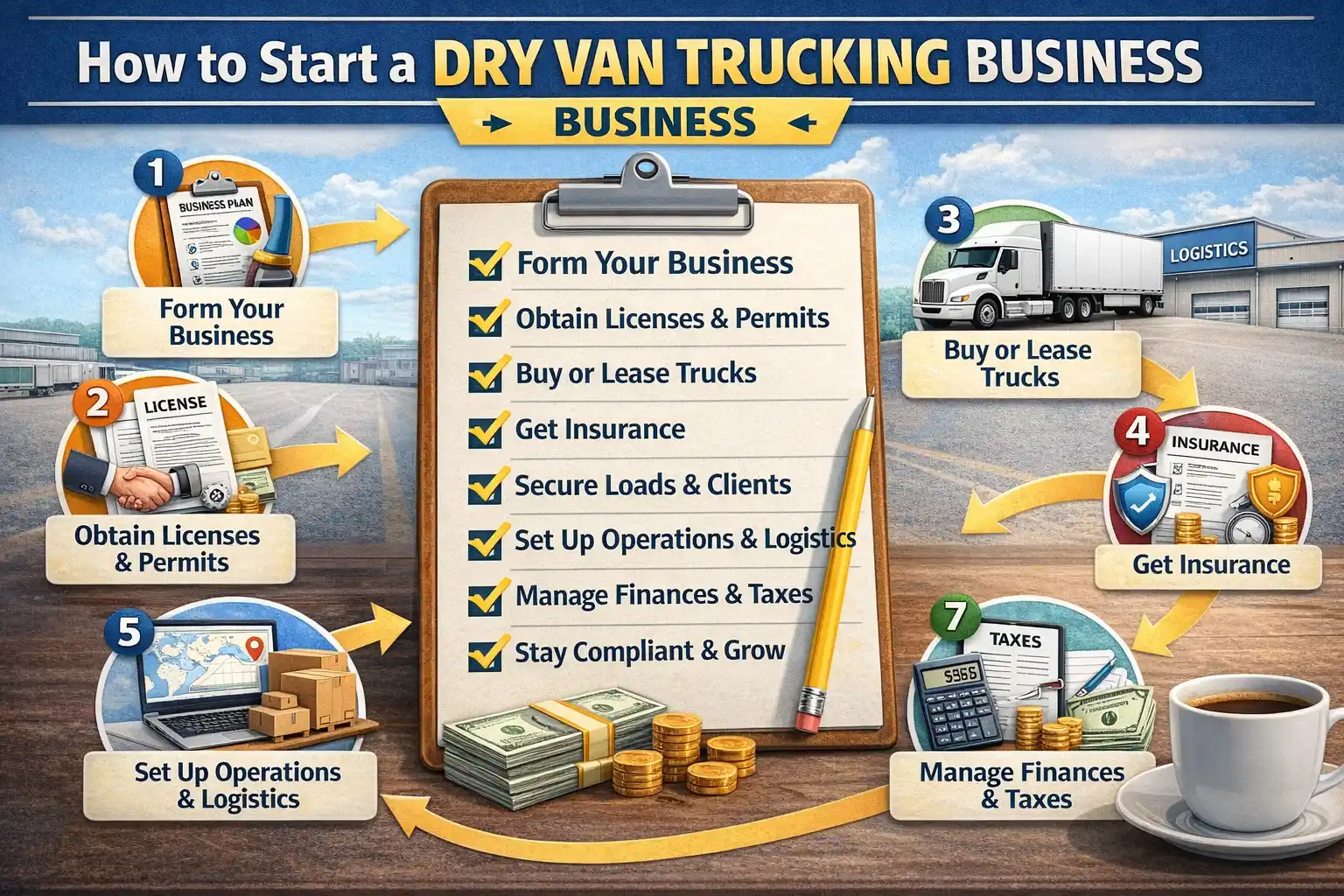
Starting a dry van trucking business can be a profitable business if you plan carefully. Dry vans are the most common of all trailers used in freight transportation and serve as a source of cargo for all goods, from retail to pallets. Here’s a full guide to owner-operators and small fleet owners to get their business started successfully.
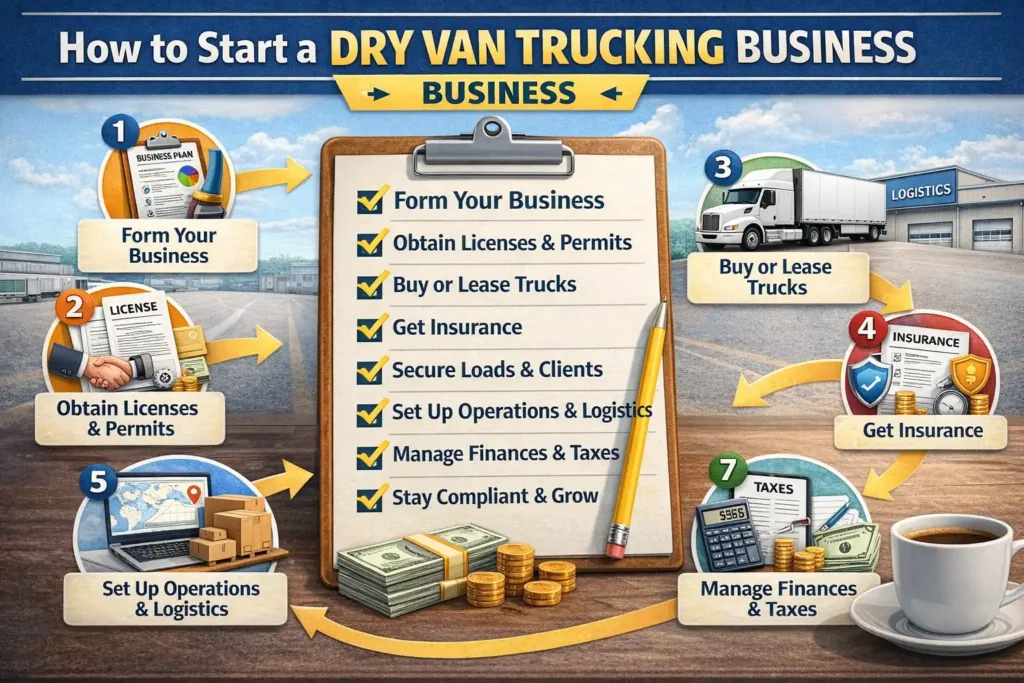
1. Research on the Dry Van Trucking Industry
Listed information before investing in the market:
- Identify high-demand dry van freight lanes.
- Learn about normal rates per mile when it comes to dry van trucking.
- Study competitors: owner-operators, small fleets, and much larger carriers.
- Learn about the freight options that can be transported using a dry van.
Tip: Dry van trucking is best for general freight such as retail goods and electronics and palletized shipments.
2. Create a Business Plan
A good business plan is useful in getting funds and your business processes.
- Business name, mission, and goals
- Number of trucks to operate
- Start-up costs: purchasing a truck, insurance, permits, etc.
- Revenue projections & expenses
- Marketing Strategy to attract clients or brokers
3. Obtain Necessary Licenses & Permits
To operate legally, you need:
- USDOT Number—Required for Freight Transport within and outside the Interstate
- Motor Carrier (MC) Number – For traveling or commercial freight
- International Registration Plan (IRP) and International Fuel Tax Agreement (IFTA) registration—For operating across states
- Heavy Vehicle Use Tax (HVUT) Filling
- Local Permits Based on Location and State
Tip: Most new trucking companies hire a compliance service or dispatcher to assist in understanding this process as well.
4. Get the Financing You Need for Your Truck
You need a dependable dry van truck. Options include:
- Buying new or used trucks
- Leasing or renting for lower up-front costs
- Financing is done through banks or trucking lenders.
Fuel efficiency, maintenance costs, and load capacity should be taken into account when selecting a truck.
5. Get Insurance
Insurance is very important in trucking:
- Primary Liability Insurance – Fees Payable for Damage Done to Others
- Cargo Insurance—Protects the freight that you carry
- Physical Damage Insurance—Works towards covering your truck in case of accidents
- Optional: Bobtail insurance if running with no trailer
6. Find Clients & Loads
To get freight for your dry van trucking business:
- Sign up on load boards (DAT, Truckstop, etc.).
- Develop relationships with freight brokers.
- Provide regular service so that you attract repeat shippers.
- Consider hiring the services of a dry van dispatch service to find loads efficiently.
7. Set Up Operations & Logistics
Organize your daily business operations:
- Track miles, fuel, and maintenance costs.
- Keep compliance for HOS (Hours of Service) logs.
- Plan for routes for efficiency and reduce costs on fuel.
- Business apps and software for handling and transporting loads (TMS, apps for tracking loads)
8. Market Your Business
To expand your business in dry van trucking:
- Make a pro professional website highlighting services.
- Join trucking forums & social media groups.
- Make contacts with shippers and brokers.
- Pack reliable service with competitive pricing.
9. Maintain Compliance & Safety
Bangladesh has higher soil temperatures than Bangladesh due to a reduced thermal trend (i.e., a decrease of rising).
- Follow the FMCSA regulations and state laws.
- Periodical truck inspection & preventive maintenance
- Keep true records of loads, miles, and delivery.
- Train yourself or your drivers on safe loading securement.
10. Scale Your Business
Once established:
- Employ additional trucks or hire more drivers.
- Expand freight lanes.
- Negotiate contracts with shippers for regular loads.
- Consider diversifying into flatbed or refrigerated trucking.
Conclusion
The dry van trucking business requires planning, compliance, and smart load management. In relation, you can create a profitable and sustainable business with the right truck, licenses, and dispatch strategy.
Tip: Partnering with a dry van dispatch service can help save time, provide more load options, and help you maximize your profits while staying focused on driving.
👉 Contact Triumph Fleet Services at www.TriumphFleetServices.com or call us at [+1 (682)900-3356]