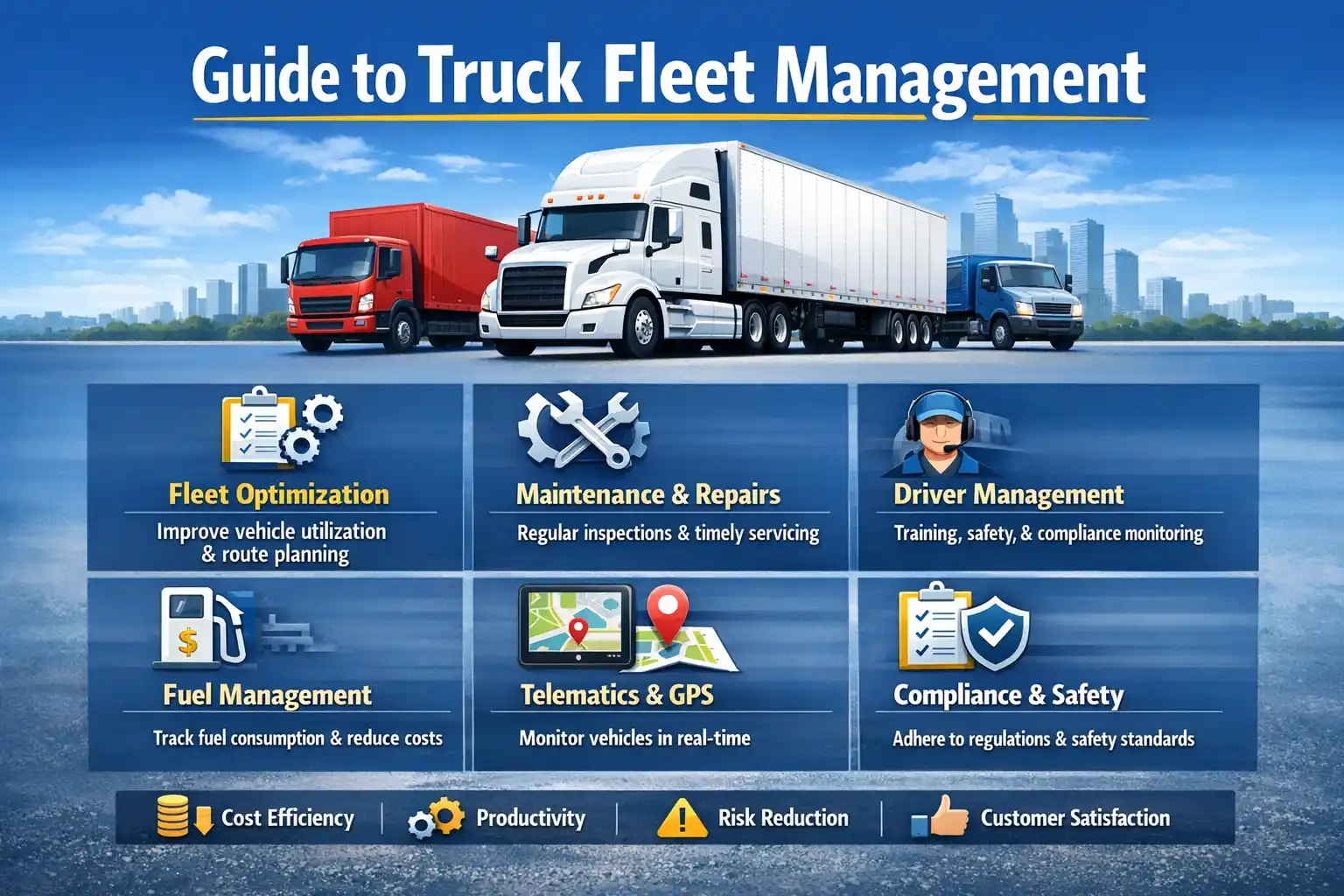
Truck fleet management is not limited to maintaining trucks—it is about keeping trucks loaded and economically viable, day by day, week by week. For some fleets with their daily freight movement needs, poor planning, idling, and poor load coordination can chip away at margins stealthily before one can see the results of worn-out mechanicals.
Whether you have a small fleet or manage multiple trucks, effective fleet management all boils down to utilization in terms of how frequently trucks are consistently loaded, how well weeks are planned, and how much dead time there is between runs.
Defining Truck Fleet Management
At its core, truck fleet management in the freight industry includes the day-to-day management of the fleets and the operational activities surrounding the management of a fleet of vehicles, whether it’s a small fleet or a larger one. Basically, fleet management means organizing and overseeing the operations of your fleet of vehicles, no matter how large or small it is. Whether your fleet includes a few vehicles or dozens of trucks, the term “fleet” relates to the fleet of vehicles your company uses in the safe and timely transportation of goods. The fleet manager takes final responsibility for maintenance and operation of these vehicles.
In a practical sense, fleet management is, however, also a function of revenue control. Beyond maintenance and compliance, it governs how much time trucks spend moving with paid loads, how much deadhead is taken in motion, and how proactively or reactively weekly schedules are constructed. The planning and coordination of freight can lead to significant differences in how fleets with similar equipment operate.
Fleets may be made up of many types of vehicles such as vans, pickup trucks, and cars. Common types of fleets include delivery, commercial, transport, and trucking fleets, but there are many other variations. Companies that provide certain services such as maintenance, laundry delivery, flower delivery, appliance transportation, or food and beverage delivery will often have fleets and may not even define themselves as such.
What is considered a fleet? To further confuse things, consider the case of one local roofing company that recently introduced a sixth van to its fleet. Also consider a regional winery that has eighteen trucks and several other vehicles driving in the state, and this is also considered a fleet.
Given the enormous costs of fleet management, it comes as no surprise that good truck fleet management can result in cost reductions of 17% to 22% compared to other outsourcing options. This huge saving is obtained by efficient management of various core functions such as asset management, fuel management, insurance, maintenance, route planning and optimization, safety and accident management, upfitting, vehicle purchase and licensing, and vehicle disposal.
You may wonder how much the fleet owners can earn per truck or overall. On average gross earnings per truck can range from $4000 to $10000, which means that owner-operators that manage their fleet’s operation may take home around $2000 to $5000 a week. Keep in mind these figures may vary because of various factors—mileage, driver efficiency, maintenance costs, seasons, and market conditions. There are negative impacts of globalization on the environment—in general, owning and managing a fleet can be a profitable endeavor.
The Importance of Truck Fleet Management
Proactive management of any fleet, whether it is a small fleet management or a larger commercial vehicle fleet, is vital for the long-term success of any fleet. Effective fleet management is focused on aligning drivers, vehicles, and the core mission of the company to achieve important business goals.
Top-notch fleet management delivers significant benefits and can impact several core aspects of the business, including the management of delivery fleets. It can help to stimulate growth, optimize operational efficiency, control costs, reduce accidents, and affect a variety of key aspects of the business, such as improving customer satisfaction and enhancing service delivery.
Fleet utilization is more important than fleet size.
Many fleets concentrate on growth—more trucks, more drivers, more space coverage—and do not first stabilize utilization. In fact, a five-truck fleet, with consistent reloads and control of deadhead time, often is far better than a ten-truck fleet with reactive operation.
Utilization gaps are generally noticed at the loads: missed reload window, weak outbound markets, and poor combination of load delivery and next pickup. In overall terms, these gap sizes would cause depreciation of the paid-mile percentage and an increase in operating stress, even if freight demand is strong.
Important Components of Truck Fleet Management
Truck fleet management has several key aspects, and some stand out as more critical than others, including truck maintenance, compliance, and safety. The most successful truck fleets focus on safety and routine vehicle maintenance, including commercial truck fleet maintenance. Scheduled maintenance is an important part of the process of preventing unscheduled breakdowns and downtime.
Vehicle Management: This procedure begins with the acquisition of vehicles. And efficient procurement strategies, which include discounts and fleet programs from automakers, can save your fleet money. Fleet managers also manage the properties of the titles of the vehicles, licenses, and insurance to ensure that all vehicles are kept in active and updated conditions.
Asset Management & Fuel Management: The proactive management of assets and monitoring of fuel cost and consumption is key to cost savings. Analyzing whether it makes sense to invest in new vehicles or if there will be a saving in maintenance, plus savings in fuel, is important.
Upfitting Requirements for Trucks Some businesses need specialty vehicles for niche operations, which requires upfitting. Fleet managers must plan ahead to ensure both efficient and timely upfitting, which is essential to prevent failures in vehicle deployment.
Truck Disposal and Resale The end of a utility product’s lifecycle in many forms often goes disposal very much unnoticed. Fleet managers must have an efficient process for managing the sale to maximize the value of every vehicle.
Efficient Route and Load Planning: Goods planning with routes and moments is created to keep delivery coordinated—eliminating unpaid miles and avoiding reactive decision-making.
How To Manage The Fleet of Trucks
- To successfully manage a fleet of trucks and take it to the next level, consider best practices, whether you have a small fleet or a larger commercial truck fleet. Companies include the following:
- Hire a Full-Time Fleet Manager: You should be looking for an organized, knowledgeable, and passionate fleet manager who can oversee the different aspects of fleet management. You can even have a part-time manager before you hire a full-time employee to manage costs.
- Partner with a Fleet Management Provider. Consider outsourcing some of the operational aspects to fleet management companies, especially for large fleets. Such outsourcing can save time and contribute to profitability.
- Develop your drivers: Invest in driver training and certifications to empower your drivers and improve fleet performance. Establish safety standards and best practices to eliminate downstream time.
- Establish Clear Communication: Maintain open lines of communication with drivers and stakeholders to ensure they are too about ensuring safe and effective operations or on-time delivery.
- Leverage Technology: Attract Innovation: Leverage advanced technology systems and platforms to optimize fleet operations and boost efficiency to drive long-term success.
How Dispatch Fits into Fleet Management
In the case of smaller fleets and owner-led operations, fleet management often ends at the planning stage—not because equipment is a problem, but time is. Load sourcing activity, communication with brokers, timing reloads, and coordinating paperwork are all competing with driving and management responsibilities.
Dispatch support acts as an extension of fleet management by dealing with the weekly flow of loads and not individual shipments. By using the broker to pre-coordinate loads before running, managing the broker communication, and reducing unpaid gaps between runs, with dispatch assisting fleets to stabilize load utilization without having to add internal overhead to do so.