Ground freight pricing, at first glance, appears straightforward. All you’ve got to use is an Illinois driver’s licence and all those goods you’ve got to ship, right? On a basic level, that is true. However, the detailed aspects of how the story is coded in the background are a key factor in the success of ground shipments and a key factor to reduce the freight costs. To make well-informed decisions about meeting your company’s requirements for the supply chain, it’s imperative to become familiar with different modes of freight forwarding and the expenses for saving at the freight associated with them to save at the freight.
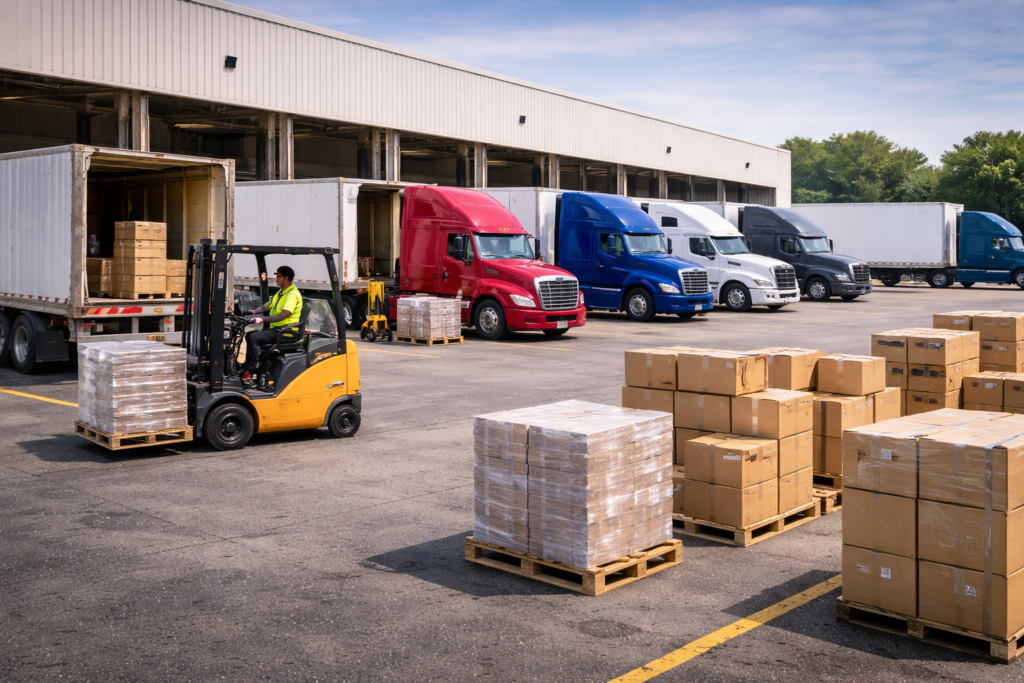
What Ground Freight Forwarding Means in Day-to-Day Trucking Operations
For the purposes of this paper, it can be defined as “ground freight – the use of various types of motor vehicles in the transfer of cargo from one point to another; affects freight transportation costs”. The range of motor vehicles includes anything from a van to a designated truck for heavy loads having an impact on ground freight pricing. Much like most other forms of logistics transportation, ground freight has a variety of service levels ranging from expedited to cost-efficient. When dealing with ground transportation, you bet you’ll run across terms like the following: Hotshot Full Truckload (FTL) and Less than Truckload (LTL) Courier Services
Common Types of Ground Freight Used in Domestic Trucking
Hotshots: A hotshot involves the sole use of a truck to carry your cargo from one location to the other and can be expensive compared to other choices. When you need to have an item delivered quickly on a vehicle that nobody else uses and that you want to track and handle with care, expedited hot shots are the way to go.
FTL (Full Truckload): FTL means that the entire truck is dedicated to your shipment, which can help you save on freight costs. This would be the logical option for when you have enough cargo to fill an entire trailer. FTL is the simplest of the ground freight forwarding types because the customer has complete control over it.
LTL (Less than Truckload): LTL means you only pay for the area your cargo takes up on the truck, which may result in savings. Shipments from different companies combine with smaller amounts of freight to fill the truck.
Courier Services Courier service forms that are used for the delivery of small shipments to specific consignees, such as hospitals or life science labs, ensuring timely delivery. If you need the item to be delivered immediately, a courier can be available to collect your item on demand, which can be done by way of hand-carry services or using a small van to ensure that your item is delivered within the required time frame.
When Ground Freight Makes Sense Compared to Other Transport Modes
The trick to successfully managing a supply chain and avoiding higher freight costs is finding a balance between cost vs. transit time. Ground transportation is a relatively fast and inexpensive alternative to air freight transportation services. Most companies have a mix of freight services to support their supply chains, such as using rail and economy ground freight to transport the majority of their product and using air freight services for expedited shipments that cover greater distances that cannot be covered overnight.
Advantages and disadvantages of using ground freight with cheap haulage companies
Advantages:
- Reliability
- Easy tracking via GPS
- Lower cost when domestic
- Flexibility
- Ability to be offloaded on request
Disadvantages:
- Increased touch points, in particular with LTL (less-than-truckload shipping), can complicate logistics.
- Increased damage/lost shipments
- High costs may arise if air freight services are needed for time-critical or intercontinental shipments.
How Ground Freight Decisions Affect Cost, Time, and Execution
Each mode of freight forwarding has both advantages and disadvantages, which affect ground freight pricing and how to reduce freight costs. How you move your freight can assist in achieving your customer’s needs as well as your financial goals; that is why it is important to consider ground freight companies. Whether you require expedited hot shots to be delivered every month to keep your production line moving or courier services from life science labs to hospitals, ground freight may be the best option for you. The use of a third-party logistics (3PL) provider, such as CVS Ship and Save, may help you decide which mode or mode mix is right for your supply chain. So, carefully weigh the benefits of freight versus ground options.
Where Dispatch Support Fits into Ground Freight Execution
Ground freight decisions don’t conclude with the choice between FTL, LTL or expedited service – decisions about which truck to ship goods on, when to reload it and how predictable a week can be.
From a dispatch standpoint, ground freight execution is about managing the loads, lanes and schedules so drivers do not wait around for longer than they have to, deadhead or find themselves in rate pressure late at the last minute.
Dispatch support side by side with ground freight, managing communications about brokers, appointments, reload sequences and driving hours are all in alignment with freight movement.
For owners, operators, and small fleets, dispatch is often employed to make ground freight from a one-off booking into a planned week that actually holds together.
👉 Contact Triumph Fleet Services at www.TriumphFleetServices.com or call us at [+1 (682)900-3356]