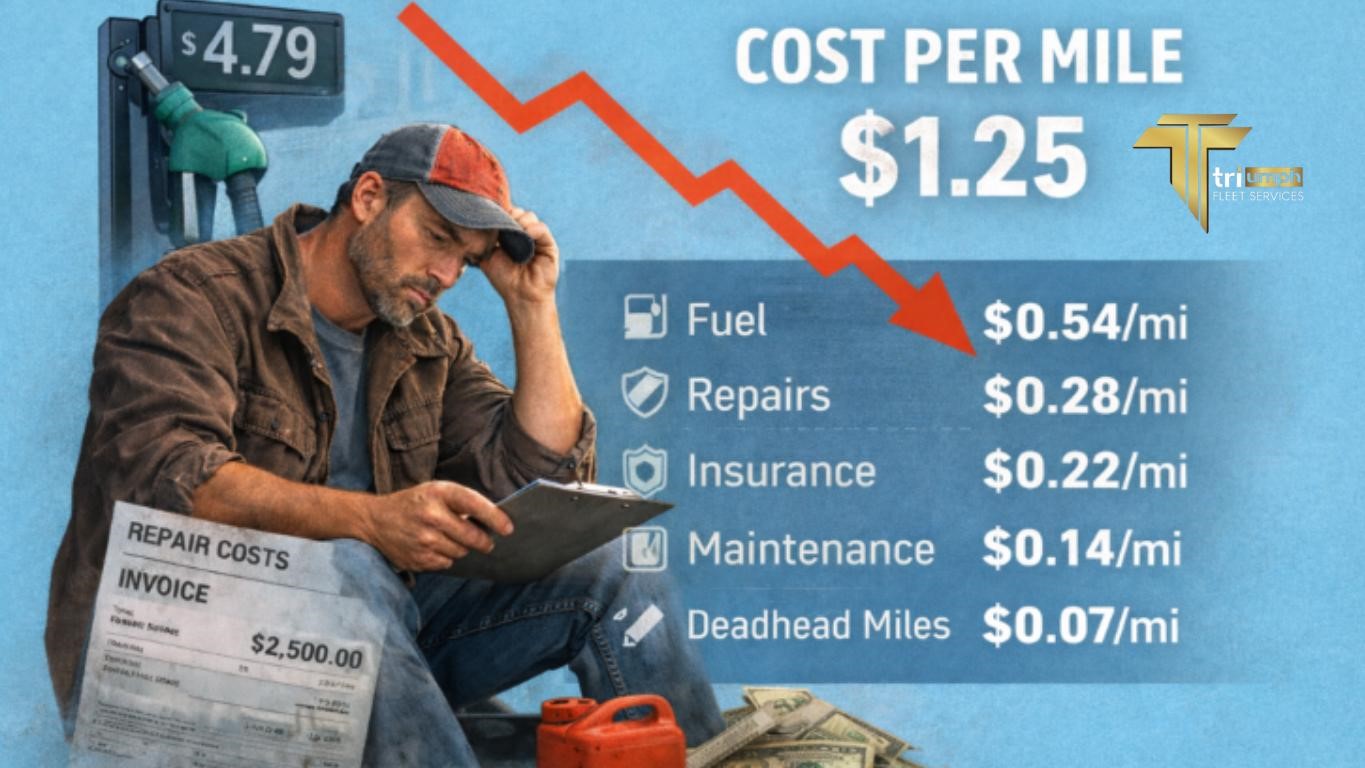
Most trucking talks about cost per mile. start too late.
They usually start after the week is over, when the fuel receipts are added up, when maintenance is planned, or when the numbers don’t quite show how busy the truck was. At that point, drivers and operators look back to figure out where the margin went. But in real life, the cost per mile is almost never set on the road.
The process of choosing, ordering, and placing freight influences the cost per mile from the outset, albeit subtly. In other words, decisions about dispatch and operations are made before the wheels start turning.
This isn’t a piece about how to figure out the cost per mile.
It’s about why the number most drivers come up with for stops doesn’t match up with what really happens when trucking operations happen in the real world.
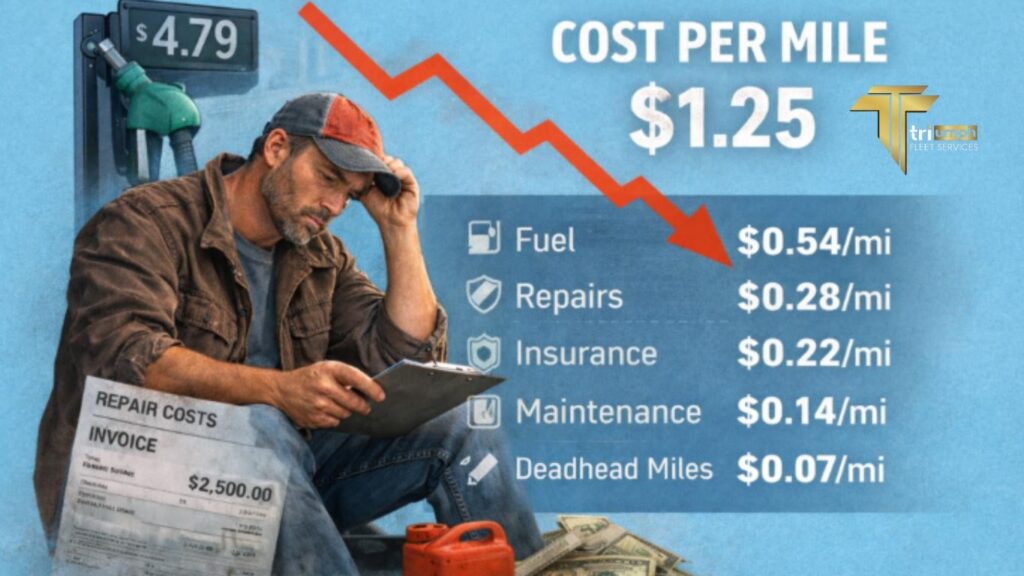
Cost per mile is an outcome, not a formula
Cost per mile seems simple on paper. Add up the costs, divide by the miles, and set a minimum. That math is important, but it doesn’t explain why two trucks with the same costs can have very different results over the same time period. The difference is almost never effort. It’s the way it’s built.
From an operational perspective, cost-per-mile trucking economics show the combined effect of choices made before a load is accepted, such as where the truck is parked, how it leaves a market, and how many deadhead miles are needed to keep it productive.
Those choices don’t seem like they cost a lot by themselves. Over time, they quietly set the standard for trucking profits.
Where cost per mile quietly escalates
One bad load doesn’t usually cause most of the margin erosion. It comes from patterns that seem right at the time:
- Accepting freight that pays “fine” but ends up in weak outbound markets
- Putting urgency ahead of lane strategy
- Taking deadhead miles as the price of being busy.
- Putting loads in order without thinking about recovery miles
- None of these options seem deadly. They all raise the effective cost per mile for trucking without setting off any alarms right away.
Many owner-operators feel busy but short on money because of this. The math is correct, but incomplete. Even when freight keeps moving, industry experts have repeatedly pointed out the gap between freight rates and actual profitability across trucking.
What this looks like in a real week
Think about a single box truck that runs regional freight, which is a common setup for owner-operators.
On Tuesday morning, dispatchers make decisions after examining two loads.
- Load A pays $1.62 for each loaded mile and delivers to a market that is doing well.
- Load B pays $1.65 per loaded mile, but it goes to an area with few options for reloading.
On paper, both loads are above the truck’s known cost per mile floor. The difference shows up later. Fuel prices are already challenging to pin down. For instance, the U.S. Energy Information Administration monitors diesel prices, which fluctuate weekly prior to any dispatch decision.
The truck reloads within 40 miles of Load A’s delivery. The total distance traveled without payment stays under 100 miles for the week. The truck sits after Load B is delivered. On Thursday afternoon, the only way to reload that works is to move the truck 220 deadhead miles without paying.
Everything went well. Not a poor broker. Not a poor rate.
But by the end of the week, that repositioning quietly adds more than $0.20 per mile to the truck’s effective trucking cost per mile, and not a single load looks bad on its own. This is how cost per mile goes up without anyone noticing: not because of one mistake, but because of the way the mistakes are made.
Why staying busy doesn’t guarantee trucking profitability
People often confuse high use with high efficiency.
If a truck has a lot of unpaid or poorly positioned miles, it can stay loaded all week and still not do well. In those situations, the paid miles have to pay for things that aren’t their fault.
Owner-operators often say they need one more positive load to make the week better. The week wasn’t underpaid; it was just not set up properly.
The cost per mile didn’t go up because costs changed. It changed because the miles added up in a different way.
Cost per mile as an operational boundary
If you only look at cost per mile as an accounting measure, you only look at it after the week is over.
When viewed as a constraint on operations, it influences dispatch decisions more promptly. Rate is not the only thing that matters when judging loads. They are judged based on the situation, such as where the truck is going next, how clean the exit looks, and whether the lane strategy makes sense.
At that point, the math for trucking cost per mile stops being just a theory. It becomes a limit that actively affects how people act.
Why disciplined trucking operations often look conservative
If you only look at cost per mile as an accounting measure, you only look at it after the week is over.
When viewed as a constraint on operations, it influences dispatch decisions more promptly. Rate is not the only thing that matters when judging loads. They are judged based on the situation, such as where the truck is going next, how clean the exit looks, and whether the lane strategy makes sense.
At that point, the math for trucking cost per mile stops being just a theory. It becomes a limit that actively affects how people act.
The cost per mile you don’t track still applies
Whether or not it’s calculated, cost per mile is paid on every mile driven. It shows up in wear, in time pressure, and in decisions made under fatigue. Ignoring it doesn’t delay the cost – it only delays awareness.
That’s why cost per mile trucking analysis isn’t just a spreadsheet exercise. It’s an operational reality.
Where dispatch fits in
It’s not enough to just know how much it costs you to drive a mile. The other half is if the choices made for you respect that number.
Dispatch isn’t just about keeping the truck moving at all costs. It’s about arranging freight in a way that keeps your floor safe by limiting unnecessary deadhead, avoiding weak exits, and passing on loads that look good on paper but don’t work well in practice.
People who own and operate their own businesses and already know their numbers can get help from TriumphFleet Services to make sure they are always correct. It’s not about how much or how quickly you need it; it’s about making smart choices about freight, lane logic, and decisions based on actual operating costs.
If you know how much it costs per mile and want dispatch to work with it instead of against it, Triumph Fleet Services is the right choice for you.
Conclusion
One of the most important things to know in trucking is how to figure out cost per mile (CPM), but many people don’t. Many drivers only look at the rate per mile that brokers offer and forget to figure out how much it really costs to run their truck. If you don’t keep track of costs like fuel, maintenance, insurance, tires, deadhead miles, and downtime, you can lose money even on loads that look good on paper.
Drivers lose money mostly because they don’t plan their routes well, don’t know their break-even point, and don’t take into account fixed and variable costs. Successful trucking companies don’t just see CPM as a number; they use it to make decisions. You should look at each load to see if it covers all of your costs and leaves room for real profit.
👉 Contact Triumph Fleet Services at www.TriumphFleetServices.com or call us at [+1 (682)900-3356]